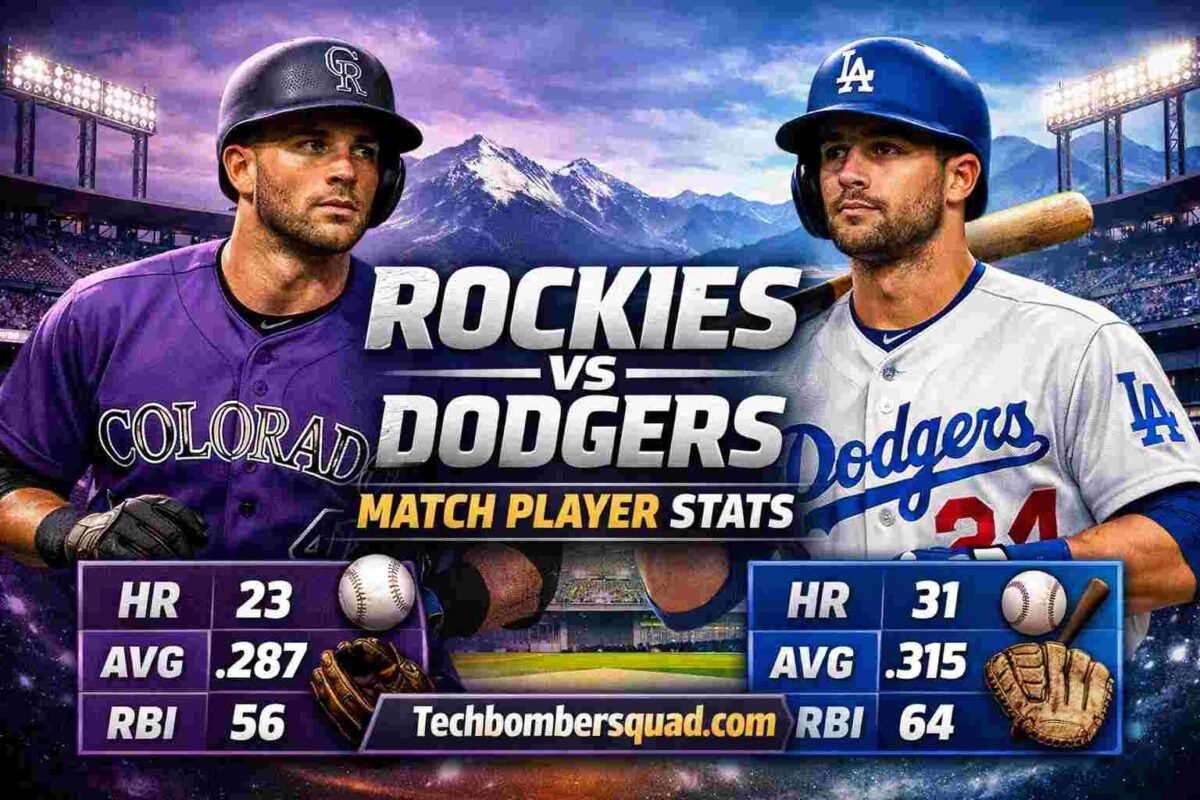
The rivalry between the Colorado Rockies and the Los Angeles Dodgers is one of the most statistically fascinating matchups in Major League Baseball. When these two teams meet, the numbers often defy traditional baseball logic, largely due to the “Coors Field Effect” and the stark contrast in team building philosophies. As we head into the 2026 season, looking at the Colorado Rockies vs Dodgers match player stats gives us a clear window into how the power dynamics are shifting within the NL West. While the Dodgers continue to operate as a high-budget juggernaut, the Rockies are leaning heavily into their youth movement, creating a statistical collision that is always unpredictable.
The Pitching Paradox: Dodgers’ Precision vs. Rockies’ Resilience
When analyzing player stats for the Dodgers, the focus almost always starts with their pitching rotation. In their recent matchups against Colorado, Dodgers’ pitchers have shown a remarkable ability to adapt their breaking balls to the high altitude of Denver. Statistically, Dodgers starters often see a slight decrease in their “spin rate” at Coors Field, yet they compensate with elite command and a heavy reliance on high-velocity fastballs. Players like Yoshinobu Yamamoto have historically managed to keep their ERA respectable against the Rockies by forcing ground balls, a crucial strategy when the thin air threatens to turn every fly ball into a home run.
On the other side, Rockies’ pitchers face a much steeper statistical climb. Playing half their games at altitude means their home-road splits are often drastic. However, young arms in the Rockies’ rotation have started showing improved “vertical break” numbers, particularly when facing a star-studded Dodgers lineup that punishes mistakes. For the Rockies to remain competitive, their pitchers must focus on “tunnels” and keeping the ball low in the zone, as the Dodgers lead the league in home runs per plate appearance during their trips to Colorado.
Offensive Fireworks: Analyzing the Hitters’ Performance
The offensive player stats for this matchup are where things get truly explosive. The Dodgers’ lineup, featuring future Hall of Famers like Shohei Ohtani and Mookie Betts, consistently produces elite “Exit Velocity” and “Hard Hit” percentages. In games against the Rockies, the Dodgers’ team OPS (On-base Plus Slugging) typically spikes, as the spacious outfield in Denver provides plenty of room for extra-base hits. Watching Ohtani’s spray chart against Rockies’ pitching reveals a hitter who can exploit every corner of the park, making him a statistical nightmare for any Colorado manager to game-plan against.
The Rockies, while often overlooked, have several “Coors Field Specialists” whose home stats are elite. Players like Ezequiel Tovar have shown incredible growth in their “contact rate” and ability to drive the ball into the gaps. When the Rockies play the Dodgers, their success often hinges on their ability to draw walks and drive up the pitch count of the Dodgers’ starters. Statistically, the Rockies perform significantly better in late-inning situations at home, often mounting comebacks that turn the Dodgers’ bullpen stats upside down.
The Coors Field Variable: How Altitude Warps the Data
You cannot discuss Colorado Rockies vs Dodgers match player stats without addressing the altitude. Scientists and sabermetricians have spent years studying how the 5,280-foot elevation affects the flight of the ball. For hitters, the lower air resistance means the ball travels roughly 5% to 10% further than at sea level. For pitchers, it means the “break” on a curveball is reduced by about 20%. This creates a statistical anomaly where a pitcher might have a 4.50 ERA at home but a 3.00 ERA on the road.
The Dodgers’ analytics department is famous for using high-tech tracking data to help their players adjust. They often change their “pitch mix” when playing in Colorado, throwing fewer sliders and more changeups, which are less affected by the thin air. For the Rockies, the challenge is the “Coors Field Hangover”—the statistical slump that often happens when they leave Denver and head to sea-level parks like Dodger Stadium. This phenomenon makes their road-trip stats look much worse than their actual talent level might suggest.
Head-to-Head Leaders: Historical and Recent Standouts
Looking at the historical leaders in this matchup, several names stand out for their statistical dominance. Freddie Freeman has consistently maintained a high batting average against Rockies’ pitching, rarely striking out and always putting the ball in play. His “Base On Balls” (BB) percentage is particularly high in these matchups, showing a disciplined approach that frustrates Colorado’s young arms.
For the Rockies, veteran presence has often been the key to stabilizing the lineup. Statistically, the Rockies’ best hitters against the Dodgers are those who can handle high-velocity fastballs. The Dodgers’ bullpen often features arms that touch 100 MPH, and the Rockies’ ability to make “Barrel Contact” against that heat often determines the outcome of the game. Tracking the “Launch Angle” of Rockies’ hitters during these series shows a deliberate attempt to lift the ball, taking full advantage of the thin Denver air.
Defensive Metrics: Efficiency in the Outfield
Defense is an underrated part of the Colorado Rockies vs Dodgers match player stats. Coors Field has the largest outfield in the MLB, which places a massive premium on “Outfield Jump” and “Sprint Speed.” Dodgers’ outfielders, known for their elite range, often have to cover significantly more ground in Colorado than they do at home. This sometimes leads to a dip in their “Defensive Runs Saved” (DRS) during these series, as the sheer volume of balls in play increases.
The Rockies’ outfielders, however, are built for this environment. They prioritize speed and “Arm Strength” to cut off doubles and prevent runners from taking extra bases. Statistically, the Rockies’ center fielders often lead the league in “Putouts,” simply because so many balls are hit into the gaps. When the Dodgers come to town, the Rockies’ defensive positioning becomes a chess match, with coaches using heat maps to predict where the Dodgers’ power hitters are most likely to aim.
Conclusion: What the Stats Tell Us About 2026
As we look at the data heading into 2026, the gap between the Dodgers and Rockies remains significant, but the statistics suggest the Rockies are narrowing the margin at home. The Dodgers will always have the upper hand in “Roster Value” and “Expected Weighted On-base Average” (xwOBA), but the Rockies’ “Home Field Advantage” remains a powerful equalizer. For the Dodgers, success in this rivalry is about managing the altitude; for the Rockies, it is about developing a pitching staff that can survive the statistical grind of Coors Field.
Ultimately, these stats are more than just numbers on a screen. They represent the clash of two different worlds of baseball. Whether it’s a high-scoring 12-10 thriller in Denver or a 2-1 pitcher’s duel in Los Angeles, the player stats tell a story of adaptation, resilience, and the relentless pursuit of an edge in the most difficult division in baseball.
You May Also Read: SV Wehen Wiesbaden vs Bayern Munich Lineups and Match Preview
FAQs
Why do Dodgers’ pitchers struggle statistically at Coors Field?
The primary reason is the lack of “air resistance” at high altitude, which causes breaking pitches like curveballs and sliders to have less “bite” or movement. Statistically, a pitch that might drop 10 inches at sea level might only drop 7 or 8 inches in Colorado. This makes it much easier for Rockies’ hitters to make solid contact. Additionally, the dry air makes the baseball slicker, making it harder for pitchers to get a consistent grip, often leading to more walks and “Hit By Pitch” (HBP) stats.
Which Dodgers player has the best historical stats against the Rockies?
Historically, players with elite “Plate Discipline” perform best. Mookie Betts and Shohei Ohtani are among the top performers, but Freddie Freeman has been incredibly consistent. Freeman’s ability to spray the ball to all fields takes advantage of the massive outfield in Denver. His “Line Drive Percentage” against Rockies’ pitching is significantly higher than the league average, allowing him to maintain a high batting average regardless of the altitude.
How do the Rockies’ player stats change when they play at Dodger Stadium?
The change is often referred to as the “Coors Field Hangover.” When the Rockies move from the thin air of Denver to the heavy, humid air of Los Angeles, the ball “slows down.” Breaking pitches suddenly have more movement, and fly balls that were home runs in Colorado become routine fly-outs in LA. Statistically, the Rockies’ team “Strikeout Rate” usually increases during the first game of a series at Dodger Stadium as their eyes and timing adjust to the different ball flight.
Are the “Advanced Stats” (like exit velocity) different in this matchup?
Yes, exit velocity is generally consistent because it’s measured the moment the ball leaves the bat, but the “Resulting Distance” is what changes. A ball hit with 105 MPH exit velocity at a 25-degree launch angle will travel significantly further in Colorado than in Los Angeles. This is why “Expected” stats (like xBA and xSLG) are so important in this rivalry; they help scouts and fans see how a player is performing independent of the atmospheric conditions.
About the Author