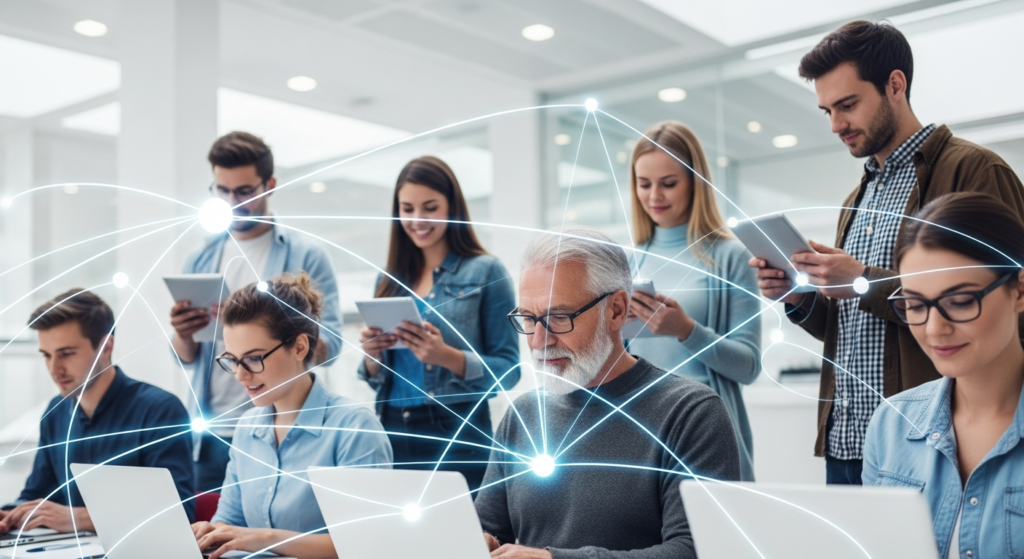
Alt: A vibrant digital illustration showing diverse students of different ages learning online. Some are on laptops, others on tablets, connected by glowing digital lines against a bright, futuristic background, representing the interconnectedness of modern education.
Remember when online learning meant those really stiff, super boring correspondence courses? You know, the ones that took forever to grade and felt like you were yelling into a void? Yeah, me too. I mean, I’m Sarah Jenkins, and I’ve been tapping away on keyboards and watching the world change for over a decade now. What will we refer to as “online learning” in 2026? It’s a whole different beast. It’s not just a backup plan anymore; it’s genuinely reshaping how we teach, how we learn, and honestly, what ‘school’ even means. My own kids, bless their hearts, probably wouldn’t even recognize half the stuff I did in a classroom growing up. It’s wild.
Breaking Down Barriers, One Screen at a Time
The biggest thing, for me anyway, is just how much easier it is to actually *get* an education now. Think about it: someone stuck in a tiny rural town, or maybe a parent working two jobs trying to finish their degree, or even someone with a disability that makes traditional schooling a nightmare. Online learning? It’s a literal lifeline. Suddenly, that degree from the university across the country isn’t some far-off dream. It’s right there, on your laptop, after the kids are asleep. Or before they wake up, depending on your caffeine intake. I know a friend of mine, she had to drop out of college years ago when her mom got sick. Fast forward to last year, and she finally finished her nursing degree, all online, from her kitchen table, fitting it around her work schedule. That’s not just convenient; that’s life-changing. And it’s happening for millions of people.
It’s about access, isn’t it? Pure and simple. We’re not confined by geography or rigid schedules like we used to be, and that’s a huge win.
Personalized Paths and Smart Tools
Okay, so it’s not just about access, though that’s a massive piece. The real magic, in my opinion, is how tech lets education get personal. Seriously. No two brains work exactly alike, right? So why should everyone learn at the same pace, from the same exact textbook? Online platforms are getting crazy smart. They can figure out where you’re struggling, where you’re acing it, and then tailor the material to *you*. It’s like having a private tutor who knows your brain better than you do — well, almost. My youngest, Leo, he learns best with games and interactive stuff. My older one, Maya, she’s all about reading and then quizzing herself. They can both get what they need from the same online course, just presented differently.
And the tools? Oh man. From virtual labs where you can dissect a frog without the actual frog (thank goodness) to AI-powered writing assistants that give instant feedback, it’s wild. Even something like Test prep has gone from being a stack of dusty books to interactive quizzes and personalized study plans that pinpoint your weak spots. It’s just so much more efficient and, dare I say, fun. For some kids, anyway. Maya still prefers a good old-fashioned pencil and paper sometimes, go figure.
The Blended Future (and a Few Bumps)
It’s not all sunshine and virtual rainbows, though. Let’s be real. Internet access is still a huge hurdle for too many families, especially in underserved communities. And screen time? As a parent, I’m constantly battling that one. You can’t just throw a laptop at a kid and call it a day. There’s a real art to effective online instruction, and not every teacher or institution has figured it out yet. The human connection, that spontaneous discussion in a real classroom, those hallway conversations — those are tough to replicate online.
Still, I think the future isn’t just ‘all online’ or ‘all in-person.’ It’s ‘blended.’ It’s taking the best of both worlds. Imagine a classroom where you do some foundational learning at home, at your own pace, then come to school for deep discussions, hands-on projects, and real-time collaboration. That’s what some schools are doing now, and it seems like a pretty smart compromise. It gives students flexibility, but also that essential social and interactive piece. It feels right, you know?
What’s Next for the Digital Classroom?
What should we do next? To be honest, I believe we are only beginning. Even more immersive experiences will be available, such as virtual reality classrooms that allow you to “visit” ancient Rome or examine the human body from the inside out. AI tutors will become even more sophisticated, offering truly personalized pathways that adapt in real-time. And micro-credentials? Those little badges or certificates for specific skills, instead of just massive degrees? They’re already a thing, and they’re only going to get bigger. It means learning can be way more agile, responsive to what jobs actually need, and less about a four-year, one-size-fits-all commitment. It’s pretty exciting, if you ask me.
It will undoubtedly be difficult for us parents and teachers to keep up with, but what about the chances for everyone to develop, learn, and truly customize their education? I can absolutely support that.
About the Author