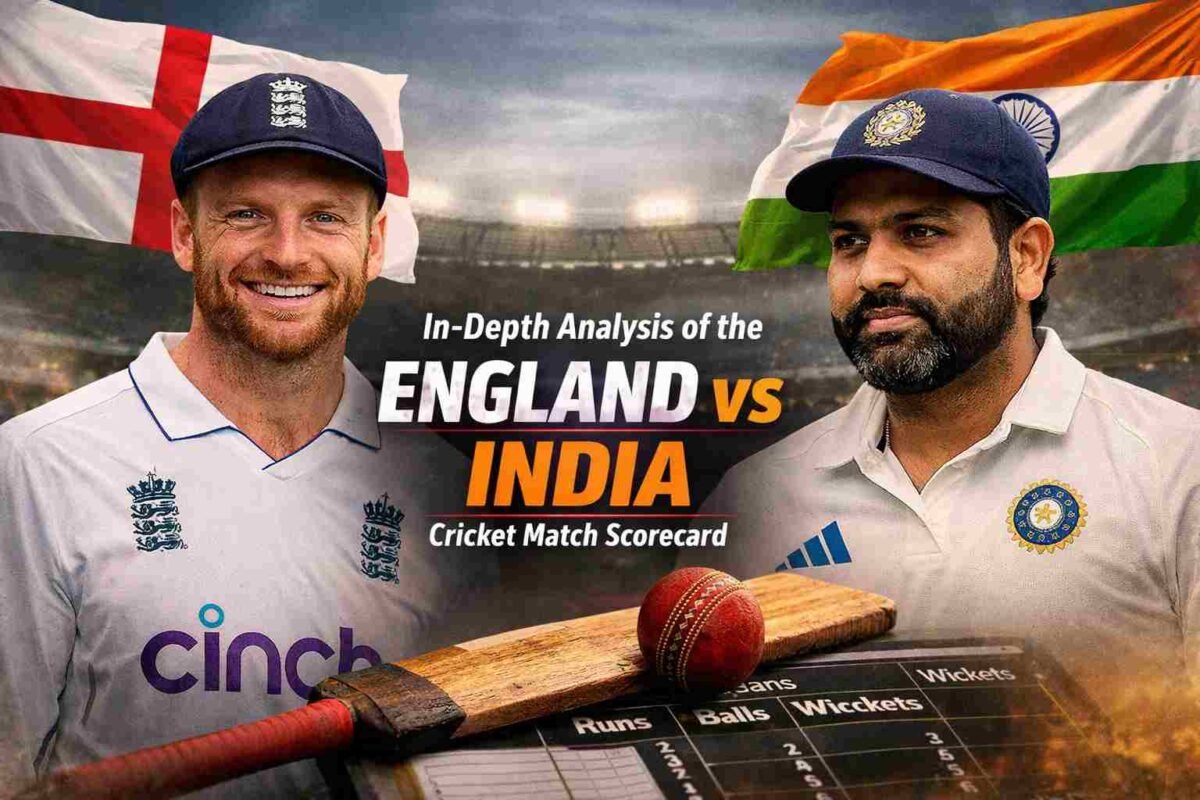
The England cricket team vs India national cricket team match scorecard is an essential resource for anyone seeking to gain a thorough understanding of a match. It goes beyond providing a summary, offering detailed insights into batting, bowling, partnerships, and individual performances. For cricket analysts, selectors, and die-hard fans, the scorecard serves as the ultimate reference for evaluating a match’s dynamics. Whether you are analyzing a Test match, ODI, or T20I, the scorecard is structured to reveal everything you need to know.
The true value of the scorecard lies not just in the final result, but in the intricate breakdown of the game’s flow. It offers a clear picture of momentum shifts, key partnerships, match-turning bowling spells, and tactical decisions that shaped the outcome. By analyzing performance metrics such as strike rates, economy rates, and fall of wickets, one can assess the quality of each individual’s contribution and understand the overall execution of strategy.
Understanding the Components of a Cricket Match Scorecard
A cricket scorecard is the backbone of statistical analysis for any match. It serves as an organized compilation of key data from the game, offering fans and analysts an easy way to dissect performance metrics. The scorecard is organized into different sections, each providing crucial insights into how the match unfolded. Here’s a breakdown of what a typical scorecard contains:
Batting Section
- Runs Scored: The number of runs each player has accumulated.
- Balls Faced: Number of balls faced by the batsman.
- Strike Rate: The rate at which a batsman scores, calculated as the number of runs per 100 balls.
- Boundaries: The number of fours and sixes hit by each batsman.
- Dismissal Type: This section shows how a player was dismissed—caught, bowled, LBW, stumped, etc.
Bowling Section
- Overs Bowled: The number of overs delivered by the bowler.
- Maidens: The number of overs bowled without conceding a run.
- Runs Conceded: The total runs given away by the bowler.
- Wickets Taken: The number of batsmen the bowler dismissed.
- Economy Rate: The number of runs conceded per over by the bowler.
Extras
- Wides, No-Balls, Byes, and Leg Byes: These extras contribute to the total score but are not directly attributable to any individual player.
Fall of Wickets
- This section records the breakdown of key partnerships and when each wicket fell, providing context for the batting performance.
Result
- This gives the outcome of the match, including the winning team and the margin of victory—whether by runs or wickets.
Why Scorecards Are Vital for Fans and Analysts
For cricket enthusiasts and serious analysts, match scorecards offer more than just a final score. The scorecard breaks down every crucial moment and performance, allowing fans to verify exact figures rather than relying on summaries or highlight reels. By diving deeper into the scorecard, fans and analysts can:
- Track the best performances: Who scored the most runs? Which bowler took the most wickets?
- Understand tactical shifts: What moments in the game changed the momentum in one team’s favor?
- Review player form: Scorecards allow fans to track individual player performances over time, helping them spot trends and patterns in a player’s game.
Unlike simple summaries, scorecards provide factual clarity—the data reflects the performance in the purest form, giving fans and analysts the tools to conduct a detailed evaluation.
The Scorecard Across Different Cricket Formats: Test, ODI, and T20I
While the fundamental structure of a scorecard remains constant, its interpretation varies based on the match format. Here’s how the scorecard is adapted for different formats:
Test Cricket:
- Multiple Innings: Test matches are played over several days and have two innings per side. The scorecard reflects this structure, providing a detailed account of every session and how teams managed their resources over a prolonged period.
- Strategic Batting and Bowling: Test cricket emphasizes technique and endurance. A match scorecard in this format reveals batting partnerships, long spells of bowling, and individual performances across extended periods.
- Session Breakdowns: The scorecard may reflect performance in sessions, with specific data on how a team performed during each session of play.
One-Day Internationals (ODI):
- 50 Overs per Side: ODIs are completed in a single day with a limited number of overs per side. The scorecard reflects the intensity of the format, with higher run rates and tactical approaches such as aggressive opening partnerships and middle-order consolidations.
- Focused Analysis: In ODIs, the scorecard emphasizes how each team accelerates towards the target, with detailed metrics on boundary frequency and batting acceleration.
T20 Internationals (T20I):
- 20 Overs per Side: T20Is are fast-paced matches, and the scorecard highlights explosive batting, aggressive bowling, and quick decision-making.
- Aggressive Strategies: The scorecard in T20Is captures high strike rates, frequent boundaries, and innovative bowling strategies like yorkers and slower deliveries to contain scoring.
Each format influences the game’s tempo, and the scorecard is the perfect tool to track and compare performances in these distinct contexts.
The Latest England vs India Match Scorecard: A Snapshot of Performance
The most recent match scorecard between England and India is the primary reference for reviewing performance and evaluating the game. It includes all the essential match details, such as:
- Match Date and Venue: Provides context for the match, indicating when and where the game was played.
- Match Format: Whether the match was a Test, ODI, or T20I.
- Result and Winning Margin: This gives a clear picture of which team won and by how many runs or wickets.
- Player of the Match: The standout performer who had the greatest impact on the match outcome.
- Player Contributions: Highlights the best batting and bowling performances, showcasing how individuals influenced the game.
Detailed Breakdown of Batting and Bowling Performances
Batting Analysis: England vs India
England’s Batting Performance:
- Opening Partnership: England’s opening pair sets the tone for their innings. The partnership’s effectiveness can be measured by how well the openers handle the new ball and the early pressure.
- Middle-Order Consolidation: The middle order often comes in during key moments—whether to stabilize the innings or to accelerate the score. Their contributions can be seen through their strike rates and the ability to rotate strike during crucial phases.
- End-Game Acceleration: England’s ability to accelerate during the final overs, whether they are chasing or setting a target, is often a defining feature of their innings.
India’s Batting Performance:
- Powerplay Impact: In limited-overs formats, the powerplay overs are key to establishing a solid foundation. India’s ability to capitalize during these overs can shift the momentum of the match.
- Middle Overs Rotation: The middle overs are often about maintaining the run rate and not losing too many wickets. India’s ability to rotate strike and find boundaries during this phase is reflected in the batting section.
- Finishers’ Impact: The role of finishers in T20Is and ODIs is critical. India’s finishers often come in during pressure situations, and their ability to score quickly defines the final outcome.
Bowling Performance Breakdown
England’s Bowling Performance:
- Early Breakthroughs: England’s bowlers focus on taking wickets early in the innings to disrupt India’s batting flow. The scorecard will reflect these breakthroughs, especially in the powerplay.
- Middle-Overs Containment: England’s bowlers are known for their ability to control the game in the middle overs, maintaining a low economy rate and limiting boundaries.
- Death Over Bowling: The ability to execute yorkers and slower balls during the death overs is a hallmark of England’s bowling attack.
India’s Bowling Performance:
- Pace vs Spin: India’s bowlers often rely on both pace and spin to break partnerships. The balance between these two styles will be captured in the scorecard.
- Key Moments: India’s bowlers shine in the crucial moments of the match—taking wickets at vital stages like the death overs or following a partnership break.
Game-Changing Partnerships: England vs India
Partnerships often define the outcome of a cricket match, particularly in limited-overs formats where quick runs are crucial. In the England vs India matches, strong partnerships can either steady the ship or accelerate the scoring when needed most. For instance:
- Rescue Partnerships: When a team is in trouble, a well-timed partnership can reverse the pressure and shift momentum.
- Fast-Scoring Partnerships: These partnerships help in taking the game forward, especially in the last few overs when every ball counts.
Conclusion: The Cricket Scorecard as the Ultimate Analysis Tool
The England vs India cricket match scorecard is an essential tool for understanding the game at a deeper level. It provides detailed insights into every player’s contribution, every team’s strategy, and every tactical shift throughout the match. For fans and analysts alike, the scorecard serves as the most reliable source of data to assess the match, from individual performances to game-changing moments.
By using the scorecard, you can break down key moments, analyze partnerships, and appreciate the tactical decisions that shaped the result of the match. Whether it’s a Test match, ODI, or T20I, the scorecard will always offer a comprehensive and unbiased view of how the game truly unfolded.
You can Also Read: SV Wehen Wiesbaden vs Bayern Munich Lineups and Match Preview
FAQs About The Match
Where can I access the latest England vs India match scorecard?
You can find the latest scorecard on official cricket websites, sports analytics platforms, and popular sports media outlets that provide live updates.
What does a cricket match scorecard include?
A cricket scorecard contains details on batting performances, bowling figures, extras, fall of wickets, and the final result, along with match highlights.
How do I interpret player statistics on the scorecard?
Player statistics such as runs, strike rates, and wickets are key indicators of performance. Compare these numbers to understand individual contributions and match impact.
What are the different formats of cricket scorecards?
Cricket scorecards vary by format: Test match scorecards reflect longer innings, ODI scorecards highlight run rates, and T20I scorecards focus on aggressive play and quick strikes.
How does a scorecard help in analyzing match strategies?
Scorecards allow for a detailed analysis of partnerships, wickets, economy rates, and key moments, helping to understand the tactical decisions that influenced the match outcome.
About the Author