Traditional farming has been the backbone of global food production for centuries. However, as the world faces increasing challenges such as climate change, population growth, and resource scarcity, the need for more sustainable and efficient agricultural practices has never been greater.
Fortunately, technology offers solutions to enhance the productivity, sustainability, and profitability of traditional farming. By integrating modern innovations with time-tested farming practices, farmers can improve crop yields, conserve resources, and ensure a more sustainable future for agriculture.
The Challenge of Traditional Farming
Traditional farming, while reliable, often relies on outdated methods that can no longer keep pace with the growing demands of a changing world. Practices like manual labor, basic irrigation systems, and natural fertilization are becoming insufficient in the face of unpredictable weather patterns, soil degradation, and increasing competition for resources. The challenge, then, is how to blend the best aspects of traditional farming with new technological innovations to meet the demands of modern agriculture.
Why Technology Matters in Agriculture
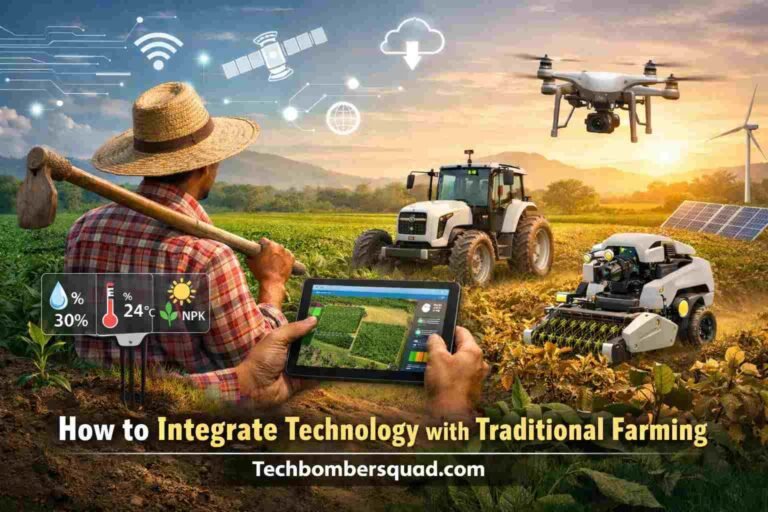
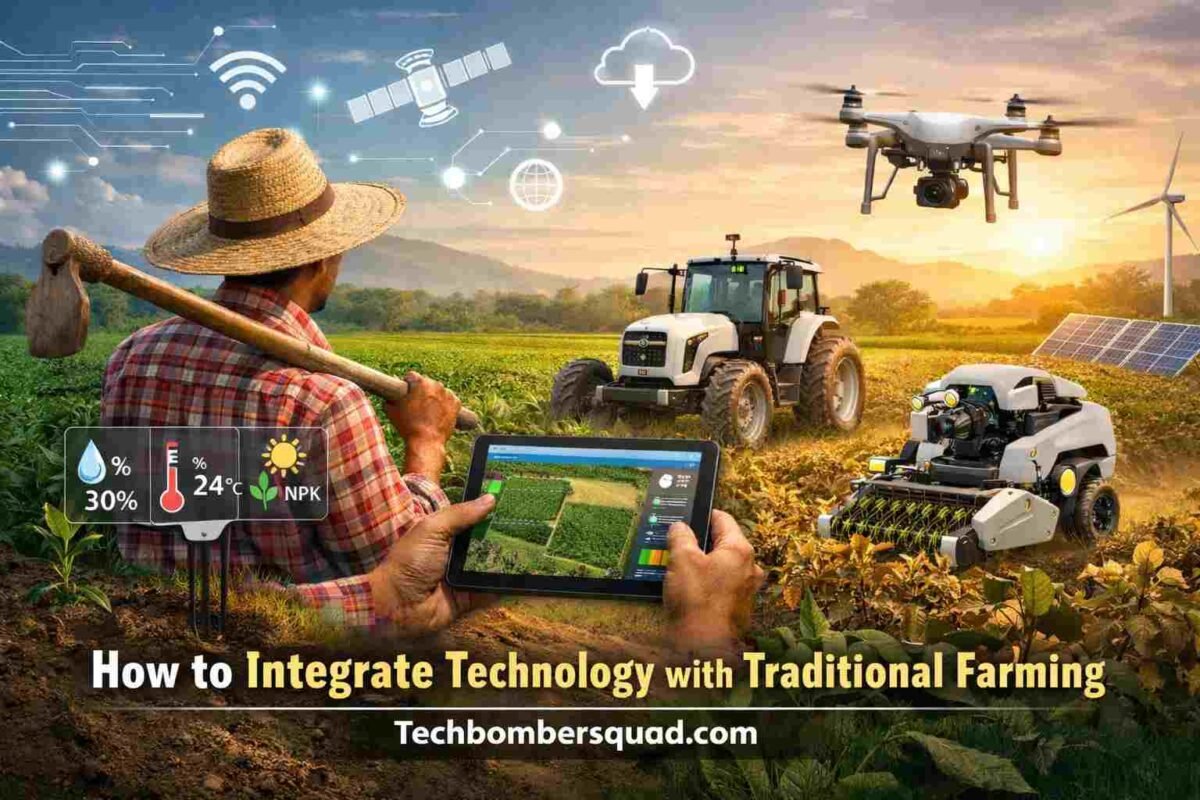
Technology isn’t here to replace traditional farming; rather, it can complement and enhance it. By integrating modern tools and practices into the farming process, farmers can overcome challenges, reduce inefficiencies, and increase yields. From smart irrigation systems to drones that monitor crop health, technology helps farmers make informed decisions that lead to better resource management, healthier crops, and a more sustainable future for agriculture.
Precision Agriculture: A Game-Changer for Traditional Farms
One of the most impactful technological advancements in farming is precision agriculture. This approach uses a combination of GPS, sensors, and data analytics to monitor every aspect of the farming process, allowing for precision in planting, irrigation, and fertilization.
How It Works:
- GPS-Enabled Equipment: Tractors and harvesters can now operate with pinpoint accuracy, reducing the amount of time and fuel required for tasks.
- Soil Sensors: These devices measure soil moisture, temperature, and nutrient levels, ensuring that crops receive exactly what they need—no more, no less.
Benefits for Farmers:
- Resource Efficiency: Precision agriculture minimizes water and fertilizer waste, reducing costs and environmental impact.
- Higher Yields: By optimizing planting and growing conditions, farmers can expect better yields, even on the same amount of land.
With the help of precision farming, farmers can cultivate healthier crops while conserving resources.
Smart Irrigation Systems: Water Conservation Meets Efficiency
Water scarcity is a growing concern worldwide, and traditional irrigation methods can often waste significant amounts of water. Thankfully, smart irrigation systems are helping farmers optimize water usage and reduce waste.
How It Works:
- Automated Systems: These systems can use weather data and soil moisture levels to determine exactly when and how much water crops need.
- Drip Irrigation: Instead of flooding entire fields, water is delivered directly to the roots of plants, ensuring maximum efficiency.
Why It Matters:
- Conservation: These systems help farmers save water, a vital resource, while still providing crops with what they need to thrive.
- Cost Savings: By cutting down on water usage, farmers can reduce utility costs, leading to better financial outcomes.
As water resources continue to dwindle, smart irrigation is crucial for ensuring that farming remains sustainable in the long run.
The Rise of Autonomous Farming: Reducing Labor, Increasing Efficiency
The integration of automation in agriculture is another major development transforming traditional farming. Autonomous machinery, such as self-driving tractors and robotic harvesters, are taking on tasks that once required significant human labor.
How It Works:
- Robotic Harvesters: Robots are now able to harvest crops like fruits and vegetables with precision, picking only the ripe produce and reducing the amount of waste.
- Self-Driving Tractors: These GPS-guided vehicles can plow fields, plant seeds, and even apply fertilizers without human intervention.
Why It Matters:
- Reduced Labor Costs: Automation reduces the need for manual labor, which can be both costly and difficult to find.
- Precision and Consistency: Machines operate with incredible precision, ensuring tasks are performed consistently and accurately, which is vital for high-yield crops.
With the labor shortage in farming being a significant issue, automation is a key solution for maintaining productivity.
Biotechnology: The Future of Crop Enhancement
Biotechnology is another technology transforming agriculture. From genetically modified organisms (GMOs) to gene editing tools like CRISPR, biotechnology is enhancing crops to be more resilient, nutritious, and efficient.
How It Works:
- GMOs: Crops can be genetically modified to resist pests, tolerate harsh weather, or have improved nutritional content.
- CRISPR Technology: This gene-editing tool allows precise modifications to a plant’s DNA, improving traits such as disease resistance or drought tolerance.
Why It Matters:
- Pest Resistance: By creating pest-resistant crops, farmers can reduce their dependence on harmful pesticides, benefiting both the environment and their bottom line.
- Drought Tolerance: With climate change affecting rainfall patterns, crops engineered to withstand dry conditions are becoming increasingly important.
Biotechnology is helping ensure that farms can continue to produce abundant food in the face of changing environmental conditions.
Data-Driven Decisions: How Big Data and Farm Management Software Help Farmers
In today’s digital age, data is king. Farm management software and big data analytics allow farmers to collect and analyze vast amounts of information to make smarter decisions about their crops.
How It Works:
- Farm Management Software: These platforms track everything from soil health and weather patterns to planting schedules and market prices, helping farmers stay organized and informed.
- Big Data Analytics: By analyzing large sets of data, farmers can predict trends, anticipate weather impacts, and make proactive decisions to improve yields.
Why It Matters:
- Informed Decisions: Data-driven insights help farmers optimize their practices, leading to higher productivity and lower costs.
- Predictive Insights: By understanding patterns and trends, farmers can plan ahead and mitigate risks, such as pest outbreaks or crop diseases.
Farm management software and big data analytics are essential tools for modern farmers looking to stay competitive in the market.
Renewable Energy in Farming: Sustainable Power for the Future
Many traditional farms still rely on conventional energy sources like fossil fuels to power irrigation systems, greenhouses, and other equipment. However, renewable energy, such as solar power, is increasingly being integrated into farming operations.
How It Works:
- Solar-Powered Systems: Solar panels are used to power irrigation pumps, greenhouses, and other farming equipment, reducing the need for grid electricity.
- Wind Energy: Some farms are also integrating wind turbines to generate power, especially in areas with high wind potential.
Why It Matters:
- Lower Costs: By using renewable energy, farms can reduce their electricity bills, leading to long-term savings.
- Environmental Impact: Renewable energy sources help reduce carbon emissions and support sustainable farming practices.
As farms look to become more self-sufficient, renewable energy offers a clean, cost-effective way to power agricultural operations.
Overcoming Barriers: How to Make Technology Accessible for Farmers
While technology offers enormous benefits, it also presents challenges, particularly for small-scale farmers. The cost of implementing new technologies and the lack of technical expertise can be significant barriers.
Solutions:
- Government Subsidies: Many governments provide financial incentives to help farmers adopt new technologies, such as tax breaks or grants.
- Training and Support: Education and training programs can help farmers learn how to use new technologies effectively, improving adoption rates.
By overcoming these challenges, technology can become more accessible to a wider range of farmers, enabling them to reap the benefits of modernization.
The Future of Technology in Agriculture
Looking ahead, the future of farming is promising. New innovations, such as vertical farming, AI-driven farms, and robotic pollination, are poised to take agriculture to new heights. These technologies will continue to help farmers increase productivity, reduce environmental impact, and adapt to changing conditions.
Conclusion
The integration of technology with traditional farming is not just about keeping up with modern trends—it’s about securing a sustainable and efficient future for agriculture. From precision farming and smart irrigation systems to biotechnology and renewable energy, technology offers countless solutions to help traditional farming thrive in today’s world. As these technologies continue to evolve, farmers will be better equipped to meet the growing demand for food while minimizing environmental impact.
You May Also Check: Greenhouse Technology Trends 2026: Future of Farming
About the Author