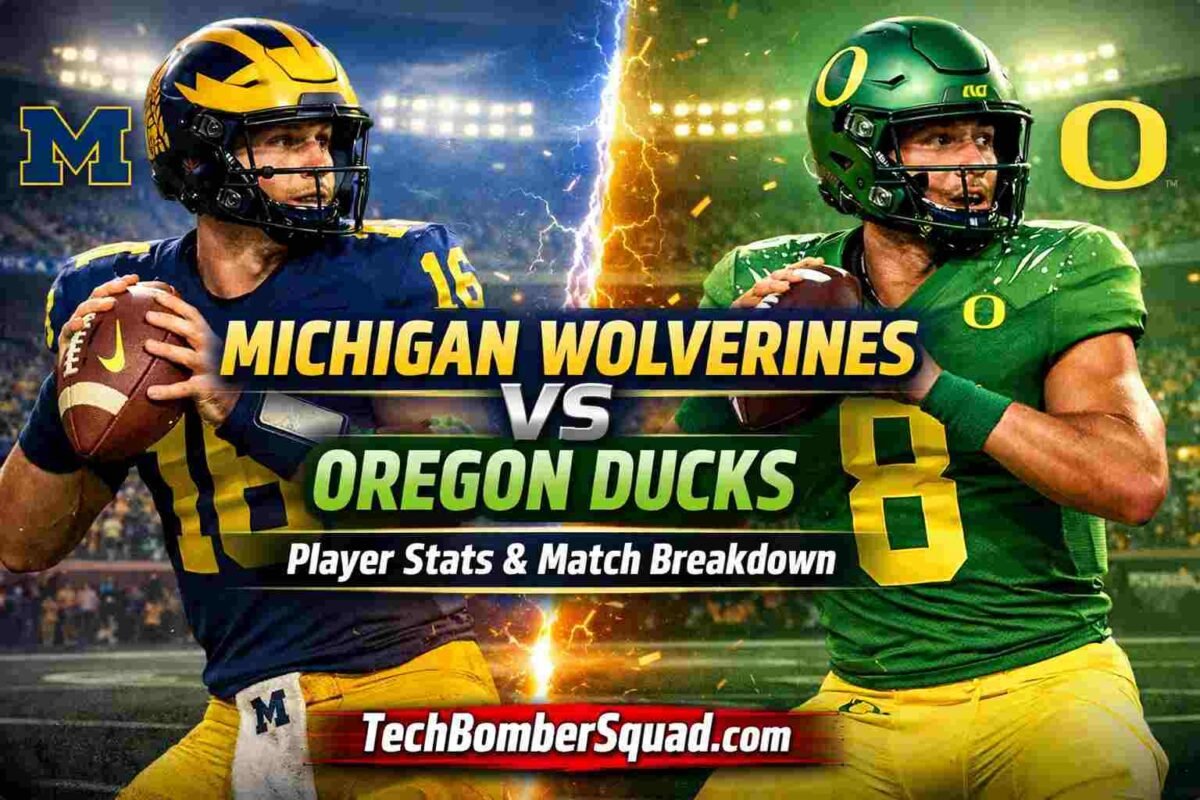
The Michigan Wolverines and the Oregon Ducks football teams have built a reputation for competing at the highest level in college football. Every match they play becomes an exciting spectacle filled with outstanding individual performances, intense rivalry, and unforgettable moments. In this article, we’ll dive into the player statistics from their most recent matchup, highlighting the key performances that led to the outcome of the game. Whether you’re a dedicated fan of college football or just want to understand the impact of player performances, this breakdown is for you.
Game Overview
In their most recent showdown, Michigan Wolverines faced off against Oregon Ducks on November 2, 2024. The game took place in an electrifying atmosphere, with both teams hungry for a crucial win in their seasons. The final score saw the Oregon Ducks dominate the MichiganWolverines with a 38-17 victory. This article will provide an in-depth look at the key stats from both teams, with a particular focus on standout performances from individual players.
Oregon came into the game with a strong offensive strategy, while Michigan’s defense was expected to stand tall. However, as the game unfolded, it was clear that Oregon’s offensive firepower, led by their star players, made the difference in securing the victory.
Key Player Stats for Oregon Ducks
The Oregon Ducks had a well-balanced offense that produced excellent numbers throughout the game. Let’s break down the performances from the key players:
1. Quarterback Dillon Gabriel:
- Passing Stats: 22/34, 294 yards, 1 touchdown.
- Dillon Gabriel was a standout in Oregon’s victory, showcasing his arm strength and accuracy. His ability to read the Michigan defense allowed him to make crucial throws at key moments in the game. Gabriel’s performance kept Michigan’s defense on its toes and allowed Oregon to control the pace of the game.
2. Running Back Jordan James:
- Rushing Stats: 23 carries, 117 yards, 1 touchdown.
- Jordan James provided the ground game that complemented Gabriel’s passing attack. With 23 carries for 117 yards, he was crucial in both grinding down the clock and maintaining possession. James’ ability to break tackles and pick up first downs kept Oregon’s offense moving forward and allowed the Ducks to stay ahead in the game.
3. Wide Receiver Traeshon Holden:
- Receiving Stats: 6 receptions, 149 yards.
- Holden was Gabriel’s go-to target throughout the match, making a series of important catches that moved the chains. His 149-yard performance was a key factor in Oregon’s aerial attack. Holden’s speed and ability to make plays in the open field were key to keeping Michigan’s defense stretched.
4. Tight End Evan Stewart:
- Receiving Stats: 3 receptions, 48 yards, 1 touchdown.
- Evan Stewart contributed as a reliable receiving option in crucial third-down situations. His touchdown catch was a pivotal moment in the game, giving Oregon a commanding lead and taking the pressure off the rest of the offense.
Oregon’s overall performance in the game showed that they were firing on all cylinders, both in the air and on the ground. With these standout performances, Oregon demonstrated why they are a force to be reckoned with in college football.
Key Player Stats for Michigan Wolverines
Despite the loss, the Michigan Wolverines had individual performances that kept them in the game for a while. Let’s take a closer look at the key Wolverine players:
1. Quarterback Davis Warren:
- Passing Stats: 13/23, 165 yards, 2 touchdowns.
- Davis Warren fought hard to keep Michigan in the game. Though he had limited success against Oregon’s defense, he threw for two touchdowns and kept Michigan competitive with some accurate throws. Warren’s performance wasn’t enough to overcome Oregon’s offensive juggernaut, but it showcased his resilience in a tough matchup.
2. Running Back Donovan Edwards:
- Rushing Stats: 10 carries, 52 yards.
- Donovan Edwards was Michigan’s primary ball carrier in this game. Although his rushing yards were limited by Oregon’s defensive line, Edwards showed his ability to find holes and gain positive yards. His performance was overshadowed by Oregon’s running game, but he was still an important part of Michigan’s offensive efforts.
3. Tight End Colston Loveland:
- Receiving Stats: 7 receptions, 112 yards.
- Colston Loveland was Michigan’s most reliable receiving option, leading the team in both receptions and yards. His 112-yard performance was an effort to keep Michigan’s offense alive, but without a consistent passing game, Loveland’s yardage didn’t translate into enough points for Michigan.
4. Wide Receiver Peyton O’Leary:
- Receiving Stats: 1 reception, 6 yards, 1 touchdown.
- While Peyton O’Leary’s stats were modest, his touchdown catch was a bright spot in Michigan’s game. His ability to make a quick catch in the red zone allowed Michigan to put points on the board, but unfortunately, it wasn’t enough to mount a serious comeback.
Team Stat Comparison
Here’s a side-by-side look at some of the key team stats from the game:
| Category | Oregon Ducks | Michigan Wolverines |
| Total Yards | 470 | 270 |
| Passing Yards | 294 | 165 |
| Rushing Yards | 176 | 105 |
| First Downs | 23 | 11 |
| Time of Possession | 32:28 | 27:32 |
As seen in the table, the Oregon Ducks dominated nearly every category, especially in total yards and passing yards. Michigan’s offense struggled to generate a consistent attack, while Oregon’s offense was able to move the ball effectively both through the air and on the ground.
Key Moments and Turning Points in the Game
Several key moments shaped the outcome of this game. One of the most crucial turning points came in the second quarter when Dillon Gabriel connected with Traeshon Holden for a deep 40-yard pass that set up a touchdown, giving Oregon a significant lead. Michigan tried to rally in the second half, but their offense lacked the consistency needed to close the gap.
Another pivotal moment came late in the third quarter when Jordan James broke free for a 25-yard touchdown run, sealing the game for Oregon. Michigan’s defense was unable to contain the Ducks’ balanced attack, and the Wolverines fell behind, unable to recover.
Impact of Player Performance on Team Success
The player performances from Oregon’s Dillon Gabriel and Jordan James were pivotal in securing the Ducks’ victory. Gabriel’s efficiency in the passing game and James’ dominance on the ground gave Oregon the offensive balance they needed to overcome Michigan’s defense. On the other hand, Michigan’s key players like Davis Warren and Donovan Edwards showed glimpses of success but ultimately couldn’t match Oregon’s explosive offense.
In a game like this, individual performances often set the tone for the entire team. Oregon’s offensive output, powered by Gabriel and James, overwhelmed Michigan, while the Wolverines’ inability to execute on offense and defense led to their downfall.
Final Thoughts and Analysis
In the end, the Oregon Ducks proved to be the superior team on both sides of the ball, outgaining the Michigan Wolverines by over 200 yards. Oregon’s offensive firepower, combined with their solid defense, was simply too much for Michigan to handle. Despite the loss, Michigan will take away important lessons from this game, especially regarding the need for a more balanced offensive approach.
Looking ahead, both teams will continue to refine their strategies as they move forward in their respective seasons. Oregon’s victory here strengthens their position in the standings, while Michigan will need to regroup and improve if they are to compete in their upcoming matchups.
You Can Also Read: Ohio Bobcats Football Vs Miami Redhawks Football Match Player Stats
About the Author