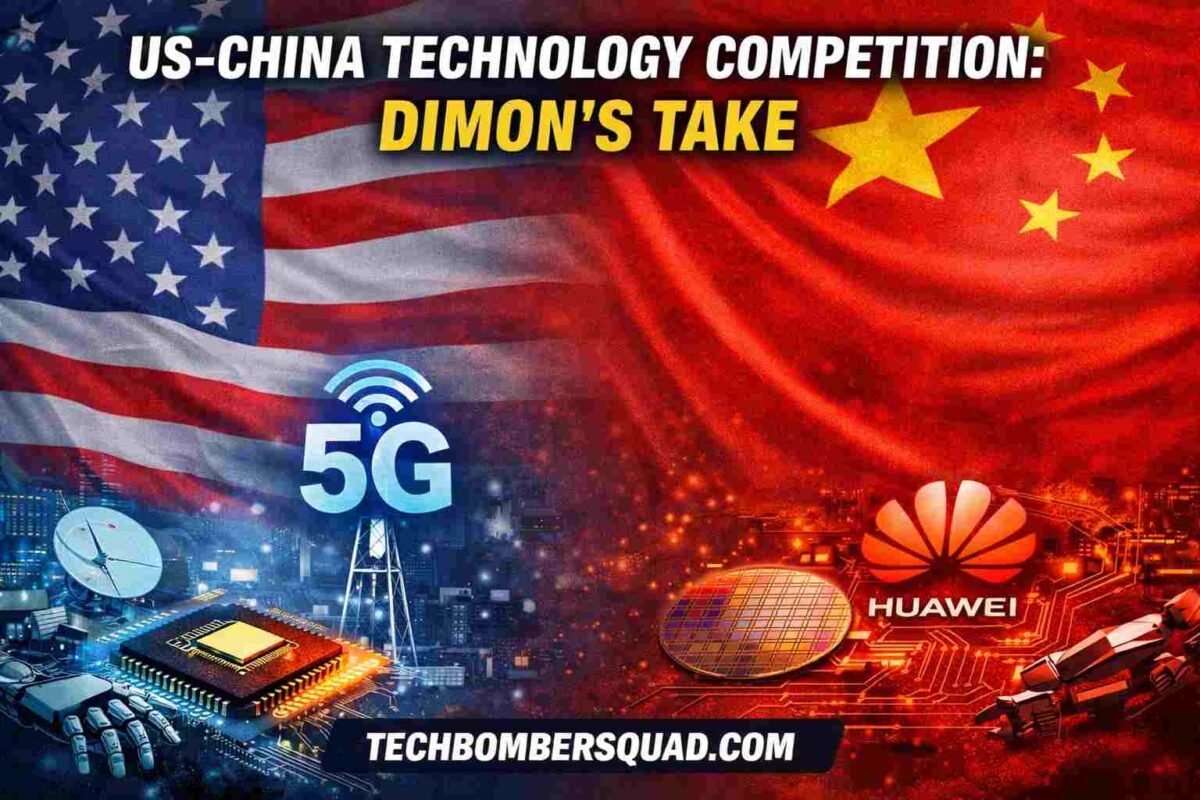
In the world of technology, no two nations are as influential as the United States and China. As global superpowers, their rivalry in the tech space is reshaping industries, economies, and geopolitics. From artificial intelligence (AI) to 5G networks, both countries are racing to lead the future. But why is this competition so significant? And what does it mean for the rest of the world? Let’s dive into the U.S.-China tech rivalry and explore its impact.
Why is the U.S.-China Technology Race Important?
Economic Powerhouse
Technology is a major driver of economic growth in the 21st century. The U.S. and China are competing to dominate key industries such as AI, telecommunications, and semiconductors. These sectors not only shape innovation but also determine which nation has the upper hand in economic power. The technology leaders of today are the global economic giants of tomorrow.
Geopolitical Tensions
Beyond economics, technology is at the center of geopolitical tensions. The race for technological supremacy is also a battle for national security. Both nations view their technological advancements as essential to maintaining military superiority, which makes this competition even more intense. The future of global leadership hinges on who controls the tech of tomorrow.
Global Influence
The U.S. and China’s technological decisions have ripple effects across the globe. Nations around the world must navigate the implications of this rivalry. The U.S. has used its technological prowess to build alliances with countries like Japan, India, and European nations. China, on the other hand, has expanded its tech influence through initiatives like the Belt and Road Initiative, offering infrastructure development to developing countries.
Key Areas of the U.S.-China Tech Rivalry
Semiconductors: The Heart of Modern Technology
Semiconductors are the building blocks of modern technology. From smartphones to computers to cars, nearly every device relies on semiconductors. The U.S. has long been a leader in semiconductor manufacturing, with companies like Intel and Qualcomm setting the standard. However, China is quickly catching up with companies like SMIC (Semiconductor Manufacturing International Corporation), pushing to reduce its dependency on foreign semiconductor suppliers.
The competition in semiconductors is not just about market share. It’s also about self-sufficiency. Both countries aim to reduce their reliance on imports, especially from the other. China’s push for technological self-sufficiency is part of its “Made in China 2025” initiative, which targets advancements in areas like robotics, AI, and semiconductor production. This race is crucial, as semiconductors are the backbone of virtually every piece of modern technology.
5G Networks: Who Controls the Future of Connectivity?
5G networks are the future of global communication. The rollout of 5G promises to revolutionize industries like healthcare, transportation, and entertainment by enabling faster speeds and more reliable connections. China’s Huawei has been a major player in 5G development, making significant strides in providing the infrastructure needed to build the next generation of wireless communication.
However, the U.S. has raised security concerns about Huawei’s role in 5G, citing potential risks related to espionage. As a result, the U.S. has pushed its allies to exclude Huawei from their 5G networks. The competition over 5G is not just about technology; it’s also about global influence. The country that controls 5G infrastructure will have a significant advantage in shaping the digital future.
Artificial Intelligence: Who Will Lead the AI Revolution?
Artificial Intelligence (AI) is one of the most important fields of technology today. From machine learning to natural language processing, AI is transforming industries at an unprecedented rate. The U.S. has a head start, with tech giants like Google, Amazon, and Microsoft leading the charge in AI research and development.
However, China has made AI a national priority. The Chinese government has committed to becoming the global leader in AI by 2030, pouring billions of dollars into research and development. Chinese companies, such as Baidu and Tencent, are making significant advancements in AI, particularly in areas like facial recognition and data processing.
AI is critical not just for business, but also for national security. The U.S. and China are both investing heavily in AI for military purposes, including autonomous drones and cyber defense systems. The nation that leads in AI will shape everything from consumer products to military strategy.
You May Also Check: AI Regulation News Today: The 2026 Reality in the US and EU
Cybersecurity: Battling in the Shadows
As technology advances, so do the threats. Cybersecurity is a critical battleground in the U.S.-China tech rivalry. Both countries face constant threats from cyberattacks, which target everything from government agencies to private businesses. Accusations of cyber-espionage have become commonplace, with both the U.S. and China accusing each other of stealing intellectual property and compromising sensitive information.
The U.S. has invested heavily in cybersecurity infrastructure to protect its assets from Chinese cyberattacks. Likewise, China has ramped up its cyber capabilities, focusing on defending against foreign interference and conducting offensive cyber operations. In a world where data is the new oil, cybersecurity has become a key strategic priority for both nations.
How is the U.S. Responding to China’s Advancements?
Government Actions
The U.S. government has taken several steps to counter China’s technological rise. In 2018, the U.S. imposed tariffs on Chinese technology products, citing unfair trade practices and intellectual property theft. In addition, the U.S. has used export controls to limit China’s access to critical technologies like semiconductors and advanced software.
One of the most significant actions taken by the U.S. was the ban on Huawei, citing national security concerns. Huawei, a leader in 5G technology, was accused of using its equipment to spy on other countries. This ban has had a significant impact on the global tech market, as countries must now choose whether to adopt Huawei’s 5G technology or rely on alternatives from Western companies.
Private Sector Responses
Private companies in the U.S. have also taken steps to respond to the growing competition. Many U.S. tech giants are focusing on innovation to stay ahead of China. For example, companies like Google, Apple, and NVIDIA are investing in AI, 5G, and semiconductor technologies to maintain their edge. Moreover, the U.S. is fostering an environment that supports tech startups, with Silicon Valley remaining a hub for technological innovation.
Investment in Innovation
In response to China’s aggressive tech investments, the U.S. is increasing its focus on innovation. The U.S. government has called for more funding in areas like quantum computing and AI. The goal is to ensure that the U.S. remains at the forefront of groundbreaking technologies, particularly in sectors critical to national security and economic growth.
China’s Approach to Tech Domination
Made in China 2025
China’s strategy for becoming a global tech leader is embodied in its “Made in China 2025” initiative. This plan aims to reduce China’s dependence on foreign technology and boost domestic innovation in areas like AI, robotics, and semiconductors. The government’s support for domestic companies has led to significant progress in these industries.
By investing heavily in research and development, China has rapidly advanced in areas like 5G, AI, and electric vehicles. This growth is fueled by a combination of state-owned enterprises, private companies, and massive government subsidies.
Government Support
The Chinese government plays a pivotal role in driving technological advancement. It provides funding, incentives, and policies that favor local companies. This approach has allowed Chinese companies to compete globally, even in markets traditionally dominated by Western firms.
The government also places a strong emphasis on data collection, enabling Chinese tech companies to develop new technologies based on large datasets. This gives them an advantage in AI and machine learning applications.
Global Expansion
China has also sought to expand its tech influence globally. Through investments in infrastructure projects, such as the Belt and Road Initiative, China is helping developing nations build their digital infrastructure. In exchange, China gains access to new markets and technology partnerships.
The Challenges of the U.S.-China Technology Race
Supply Chain Dependencies
One of the biggest challenges in the U.S.-China technology rivalry is the interdependence of both countries’ supply chains. While both nations are pushing for self-sufficiency, they still rely heavily on each other for critical components. For instance, China is a major supplier of rare earth metals used in electronics, while the U.S. provides advanced semiconductor technologies. The ongoing trade tensions highlight how vulnerable global supply chains can be to political disputes.
Intellectual Property Theft
Intellectual property theft has been a long-standing issue between the U.S. and China. U.S. companies accuse Chinese firms of stealing trade secrets and copying products. This has led to legal battles and strained relations between the two countries. Protecting intellectual property is a critical issue for tech companies, as innovation depends on the ability to safeguard ideas and inventions.
Bifurcated Global Economy
As the U.S. and China continue to compete in technology, there is a risk of a bifurcated global economy. Countries may be forced to choose sides, creating a split in global technology standards and markets. This division could hinder global trade and innovation, making it harder for countries to collaborate on tech solutions.
The Future of U.S.-China Tech Competition
Innovation in Both Countries
Despite the rivalry, the U.S. and China’s competition is likely to drive innovation. As both countries push to outdo each other, we can expect new technological breakthroughs that will benefit consumers worldwide. From advancements in AI to the rollout of 5G, the technological race will continue to shape industries and improve everyday life.
Potential Collaborations
While competition is fierce, there are areas where cooperation could benefit both nations. For instance, the U.S. and China could collaborate on global issues like climate change, health technology, and cybersecurity. The key to success will be finding areas of mutual interest where both countries can work together for the greater good.
Impact on Consumers
For consumers, the U.S.-China tech rivalry means more choices and lower prices. As both countries innovate and compete, consumers will have access to better products at more affordable prices. However, this competition may also lead to some challenges, such as disruptions in supply chains or limited access to certain technologies depending on which country leads.
Conclusion
The U.S.-China technology race is not just about who gets to lead the digital world; it’s about shaping the future of global economies, geopolitics, and innovation. Both nations have strengths and weaknesses, but their rivalry will drive new advancements in technology that will benefit the world. Whether in AI, 5G, or semiconductors, the competition will continue to evolve, and so will the global tech landscape.
You May Also Check: Latest Rehabilitation Technology News: Innovations Shaping the Future of Recovery
About the Author